
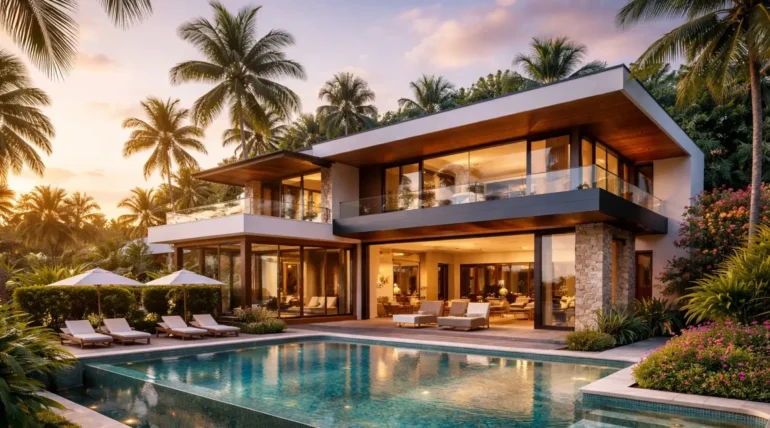
Kerala homes are changing. You’ve seen it. The classic wooden rafters and heavy granites are making way for glass walls and indoor gardens. But is it just a trend? Not really. It’s an evolution. If you’re torn between the nostalgia of a Nalukettu and the crisp lines of a modern tropical house design, you aren’t alone. Most homeowners in Kerala today want the soul of the past with the breathing room of the future.
Table of Contents
| What Defines the Traditional Kerala Home? |
| How Does Modern Tropical House Design Change the Game? |
| The Big Shift: Materials and Light |
| Why BNG Interiors Blends Both Worlds |
| Final Thoughts |
| FAQ |
What Defines the Traditional Kerala Home?
Traditional Kerala architecture was built for one thing: survival. Our ancestors dealt with brutal monsoons and sticky heat without AC. They used what was under their feet. Laterite stones. Teak wood. Clay tiles. The iconic sloped roofs weren’t just for looks; they kept the rain off the walls and pulled hot air up and out.
The heart was always the Nadumuttam. That open courtyard kept air moving through every room. It was functional. It was communal. But let’s be honest, it could also feel dark and a bit cramped by today’s standards.
How Does Modern Tropical House Design Change the Game?
Think of this style as the “unfiltered” version of tradition. It keeps the climate-smart ideas but ditches the clutter. Instead of tiny windows, we use floor-to-ceiling glass. Instead of dark wood everywhere, we use polished concrete, light timbers, and white walls.
The goal? Let the outside in. In a modern tropical house design, your living room shouldn’t feel like a box. It should feel like a porch. It uses “passive cooling”, a fancy way of saying we place windows exactly where the breeze hits to keep your electricity bill low.

The Big Shift: Materials and Light
Traditional homes relied on heavy shadows to keep cool. Modern design uses light. By using “jaalis” (perforated screens) or strategic overhangs, a designer can flood a room with soft light without the heat.
- Traditional: Dark wood ceilings, heavy carvings, and small openings.
- Modern Tropical:Exposed brick, indoor plants, and open-plan layouts.
It’s about “biophilic design.” That’s just a pro term for living with nature. Think of a bathroom with a private outdoor shower or a kitchen that opens directly onto a koi pond.
Why BNG Interiors Blends Both Worlds
At BNG Interiors, we don’t believe you have to choose. You can have a home that looks like a sleek resort but feels like your grandmother’s house. We use the logic of the old ways like high ceilings and cross-ventilation and wrap them in a minimalist aesthetic.
Whether you’re in Kochi or a quiet village, the humidity is the same. Your home needs to breathe. We focus on layouts that prevent dampness and maximize every square inch of your plot.
Final Thoughts
So, do you want a home that looks backward or one that lives forward? The best designs usually do a bit of both. Which element of a traditional Kerala home would you never give up? Tell us, and let’s figure out how to make it modern.
FAQ
Honestly? Both work if done right. Traditional sloped roofs are king for drainage. But a modern design with deep sunshades and waterproof glass works just as well. The real “secret” is high-quality sealing and smart gutter placement.
It can be. Large glass panels and specialized “breathable” materials cost more upfront. But you save money later because you aren’t running the AC 24/7. It’s an investment in your comfort.
Yes. It’s called a renovation. We usually start by knocking down non-structural walls to let light in and swapping dark finishes for lighter, natural textures. It’s a total vibe shift.
Because we use natural materials like stone and wood, they age beautifully. You don’t need to paint every year. Just keep the plants watered and the glass clean!