
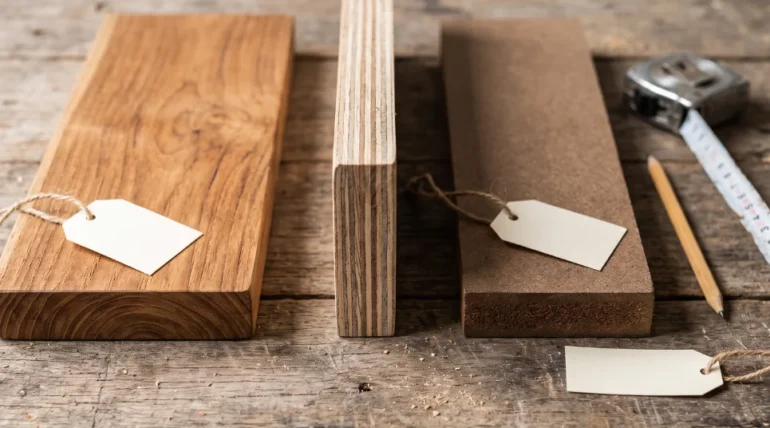
Choosing a bed or wardrobe material feels like a small call until the monsoon arrives. The main types of wood furniture come down to three materials: solid wood, plywood and MDF. Solid wood is cut straight from timber, plywood is thin wood layers glued together, and MDF is pressed wood fibre. None wins everywhere. The right pick depends on the piece, the room and how damp it will look.
Table of Contents
| Types of Wood Furniture by Material |
| Which Wood Material Is Best for Home Furniture? |
| How Kerala’s Weather Changes the Choice |
| Sofa Frames and Hidden Materials |
| Who Can Help You Decide |
| Final Thoughts |
| FAQ |
Types of Wood Furniture by Material
Most Kerala homes use solid wood, plywood, MDF, or a mix. Wood furniture manufacturers in Kerala also list multiwood beside plywood, so ask what each term means in a quote before comparing prices.
Solid wood
Solid wood is timber cut into boards, with no layers or fillers. You can sand and refinish it, and it feels heavy and warm. The catch is movement. Wood takes in moisture and releases it, so poorly dried or poorly finished boards can swell, shrink or warp. It suits beds, dining tables and benches, where strength and repair matter.
Plywood
Plywood is thin wood sheets glued in layers, with each layer’s grain turned against the next. That cross-layering helps panels stay flat. Grades vary a lot, and the glue matters as much as the wood. Wardrobes, almirahs, bookshelves and TV cabinets often use it because they need wide, steady panels.
MDF
MDF is wood fibre mixed with resin and pressed into smooth boards. Paint and laminate sit well on it, so it’s common for panels and decorative fronts. Water is its weak spot. Damp edges swell, and screws loosen if you remove and refit them. Some boards release formaldehyde from their resin, so ask for the emission rating. Keep it in dry spots.
| Material | Strength | Damp Resistance | Common Use |
|---|---|---|---|
| Solid wood | High | Moderate, if treated and finished well | Beds, dining tables, benches |
| Plywood | High, depends on grade | Better in moisture-rated grades | Wardrobes, shelves, cabinets |
| MDF | Moderate | Low | Panels, decorative fronts |
This is a general comparison. Grade, glue and finish change the results.
Which Wood Material Is Best for Home Furniture?
No single material is best. Match it to the piece.
- Beds, dining sets and benches: solid wood frames handle weight and daily movement.
- Wardrobes, almirahs and bookshelves: plywood gives wide panels, and shelves hold up under books and clothes when the thickness is right.
- TV cabinets and wall panels: MDF can work in dry rooms.
- Coffee tables and chests of drawers: either material works, depending on size and use.
No single material is best. Match it to the piece.
How Kerala's Weather Changes the Choice
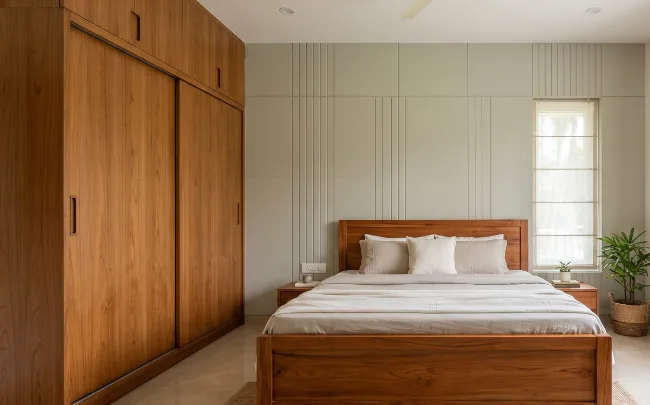
Humidity, heat and heavy rain affect furniture more than style does. Moisture can swell boards and loosen joints, and termites and borers go after untreated timber. Different types of wood furniture age differently in damp rooms, so joints and finish matter as much as the material. Ask what treatment was used against termites and borers and which finish suits damp weather. Treatments vary, so ask about safety too, especially for children’s rooms.
Sofa Frames and Hidden Materials
Fabric gets the attention, but a sofa frame carries the weight. Sofa manufacturers build the frame first, then add the upholstery, and the frame material decides how long the seat stays firm. Ask what the frame is made of and how it was checked before covering.
Who Can Help You Decide
Interior designers in Malappuram usually start with layout, storage and budget, then pick materials piece by piece. A room plan shows where a wardrobe sits against a damp wall or where a TV unit picks up heat. Some wood furniture manufacturers cut, join and finish everything in their own unit, which makes it easier to explain why a material was chosen. Ask for material names in writing, and ask to see sample boards.
Final Thoughts
Solid wood, plywood and MDF all have a place. Strength, moisture and budget pull in different directions, so most good rooms mix them by piece. A solid wood bed, a plywood wardrobe and an MDF wall panel can sit together without trouble. Quality varies by grade, brand and finish, so treat this as general guidance and confirm details with the maker or a qualified professional. If you’d like a second opinion on materials for a specific room, BNG Interiors is open to that conversation. Which piece in your home worries you most when the rains start?
FAQ
Neither wins everywhere. Solid wood is great for beds and tables that take a beating. Plywood is better for big flat panels like wardrobe doors. Most good rooms use both.
It’s widely used and fine in dry rooms. Check the emission rating, since some boards release formaldehyde. If anyone at home has breathing problems, ask a doctor too.
It can. Moisture causes swelling, loose joints and mould on poorly sealed pieces. In Kerala, ask about sealed finishes and termite treatment before you order.
Yes, and most people do. Use solid wood for frames and plywood for panels.
Get the material in writing. Then look at a cut edge. Solid wood shows continuous grain, plywood shows layers, and MDF looks like uniform brown fibre.