
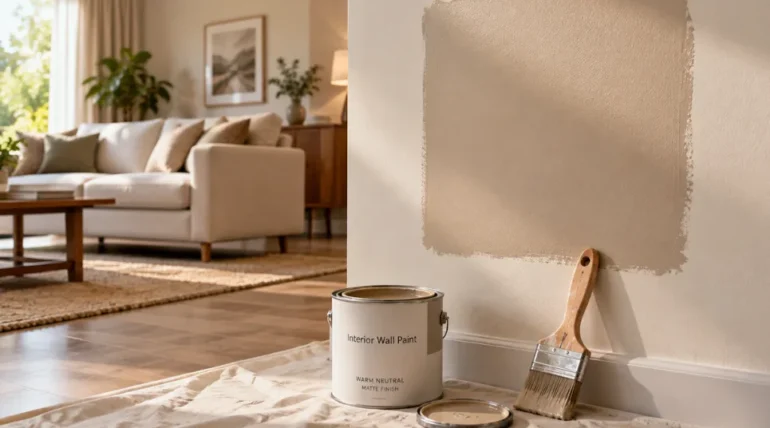
Wall paint colors change more than the mood of a room. They affect how large a space feels, how your furniture reads against the walls, and how a house holds up through Kerala’s shifting monsoon light. Homeowners across Malappuram often pick a shade off a small swatch card, only to watch it look entirely different once it covers four walls. Paint interacts with sunlight, ceiling height, and every wooden surface in the room, so testing a shade properly matters more than chasing whatever tone is trending this year.
Table of Contents
Start With How the Room Is Used, Not the Color Chart
Before settling on wall paint colors, look at how the room actually functions through the day. A north-facing bedroom that gets soft, indirect light most of the day can carry a deeper tone than a west-facing living room that catches harsh afternoon sun. This is one reason firms offering interior design in Malappuram begin with a full walkthrough of the space, weighing the house layout, the family’s daily routine, and the available budget before any color gets discussed. Space planning matters here too. A wall that will hold a large wardrobe or a wall-mounted TV unit needs a tone that still reads well once half of it is covered. Some firms also include a 3D visualization step, so you see roughly how a shade will sit against your ceiling height and existing furniture before a wall gets touched. That kind of preview catches mismatches a paint chip alone cannot show, and it saves a repaint a few months later.
Matching Wall Paint Colors To Wood Tones And Cabinetry
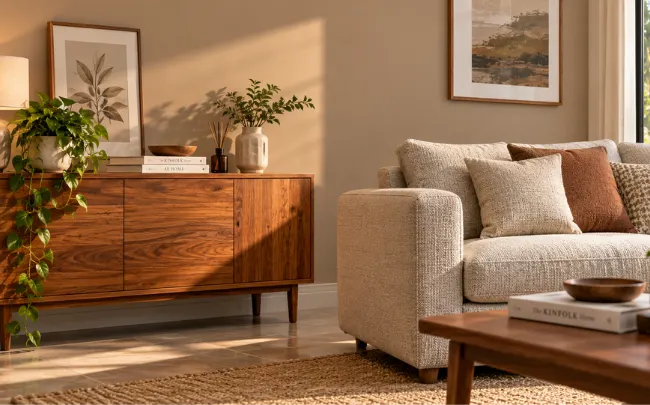
Wall color rarely stands alone. It sits next to wardrobes, TV units, dining tables, and cabinet fronts, and the undertone of the wood changes how a paint shade actually reads on the wall. A warm-toned teak or mahogany wardrobe can make a cool grey wall look flat and lifeless, while a lighter oak or ash finish tends to sit comfortably against both warm and cool neutrals. Established wood furniture manufacturers in Kerala also factor in the region’s humidity when finishing furniture, using sealants and coatings meant to resist swelling and discoloration over years of monsoon exposure. Furniture built in an in-house workshop, rather than bought off a showroom floor, tends to match a room’s actual wall dimensions more closely, since the pieces are sized for the space instead of a generic layout. Before finalizing a wall shade, hold a scrap of the actual wood finish, or even a clear photo of your existing furniture, against the paint sample directly in the room. Store lighting and phone screens both distort the true tone, sometimes badly.
Coordinating Walls With Upholstery And Seating
Seating takes up more visual space in a living room than most people account for, so wall paint colors need to work with the sofa rather than sit apart from it. A muted, warm wall tone tends to let a patterned or brightly upholstered sofa stand out as the focal point, while a busy wall finish next to a heavily textured sofa can make the whole room feel cluttered instead of layered. Sofa manufacturers typically walk clients through fabric, leather, and color choices as part of an early design consultation, alongside size, frame material, and comfort requirements. A thorough quality check on stitching and frame construction usually happens after the color and fabric are locked in, so it helps to treat the seating decision as a package rather than an afterthought. If new seating and a repaint are happening around the same time, settle the fabric or leather shade first. Adjusting a wall color to match upholstery is far simpler than reupholstering a sofa to match a wall.
Test the Color in Your Own Light Before You Commit
Paint chips mislead people, not on purpose, but because store lighting has almost nothing in common with a living room at four in the afternoon. Vision research on the hue-heat effect has found that cool ambient color creates a perception of cooler temperature while warm color leads to a warmer temperature perception, which is one reason the same tin of paint can look beige at noon and faintly pink by evening. Buy a sample pot before committing to full gallons. Paint a section at least two feet wide on two different walls, one that catches morning sun and one that does not, then look at both across a full day, including after dark under your regular bulbs. Check the sample again after it has fully cured, since many water-based paints shift slightly in tone over the first few days as they dry out completely. Skipping this step is the most common reason a repaint job needs redoing within a year.
Final Thoughts
Wall paint colors work best when the choice comes from testing in your own space, not from a trend list or a showroom wall. Look at how each room is actually used, hold real wood and fabric samples against your shortlist, and give any shade a full day under your own light before committing to gallons. What tone are you leaning toward for your next room?
FAQ
Paint a sample patch at least two feet wide directly on your wall and watch it across a full day. Store lighting, phone cameras, and small swatch cards all distort how a shade actually reads once it is on your surface.
Pick your major wood pieces and sofa fabric first if you can. It is far easier to adjust a wall shade to match existing furniture than to source new furniture that matches a wall you already painted.
Light direction is the main reason. A room facing north gets flatter, cooler daylight, while a west-facing room picks up warm, intense afternoon sun, and both change how a single color reads.
Not always. A dark, saturated tone on one wall can actually add depth to a small room if the lighting and furniture are balanced. Painting all four walls dark in a poorly lit space is where rooms tend to feel cramped.
Give it a few days. Many water-based paints continue to cure and can shift slightly in tone as they dry out fully, so a wall painted yesterday is not showing its final color yet.